
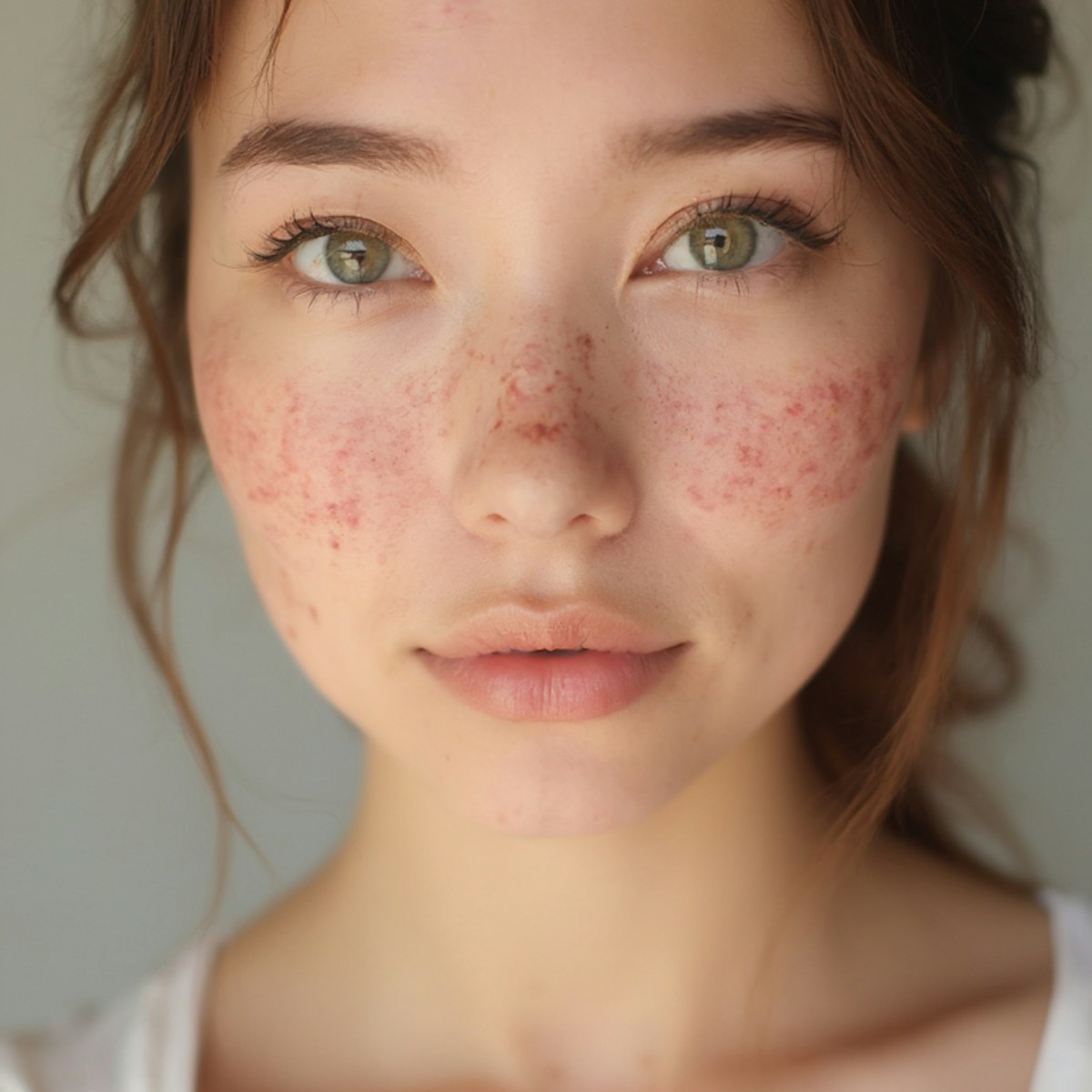
You are exhausted. I know you are, because I have seen the bathroom counters of people just like you. They are graveyards of half-used bottles—salicylic acid cleansers, expensive retinoids, heavy creams, and prescription antibiotic gels. You look in the mirror and see a texture that looks like acne, but feels… different. It’s uniform. It’s stubborn. And maddeningly, it itches.
What is the ultimate Natural Treatment for Fungal Acne?
If you have tried everything and nothing works, or if “acne treatments” make you break out more, you are likely the victim of a case of mistaken identity.
You are treating a bacterial infection, but you are hosting a fungal party.
Welcome to the hidden epidemic of Malassezia Folliculitis, commonly known as “Fungal Acne.” And welcome to the solution that nature engineered specifically for this fight: Litsea Cubeba.
The Great Imposter: Difference Between Fungal and Bacterial Acne
(Keyword: Difference Between Fungal and Bacterial Acne)
Before we unleash the remedy, we must confirm the enemy. Bacterial acne (Cutibacterium acnes) is usually caused by clogged pores, excess oil, and bacteria. It results in pustules, cysts, and blackheads of varying sizes.
Fungal acne is entirely different. It is an overgrowth of a yeast naturally found on everyone’s skin called Malassezia. When this yeast grows out of control, it invades the hair follicle.
The Fungal Acne Checklist:
- The Itch: This is the #1 tell. Bacterial acne rarely itches. Fungal acne feels like a prickly heat rash.
- The Uniformity: The bumps are usually the same size—tiny, red, whitehead-looking papules. They often appear in clusters.
- The Location: It loves the forehead, hairline, chest, and back (sweaty zones).
- The Antibiotic Backfire: Did you take doxycycline or apply clindamycin, and your skin got worse? That is the smoking gun. Antibiotics kill the good bacteria that keep the yeast in check, allowing the fungus to take over completely.
Why Your Skincare is Feeding the Beast
(Keyword: Ingredients That Feed Fungal Acne)
This is the most heartbreaking part of the Malassezia journey. The yeast feeds on fatty acids with carbon chain lengths of C11 to C24.
Translation? Your oils, esters, and fatty acids are lunch.
Most “natural” skincare is deadly for you. Coconut oil? Feast. Olive oil? Banquet. Shea butter? Buffet. Even naturally occurring sebum in your pores feeds it. The yeast eats these lipids and excretes irritating byproducts that inflame the skin barrier, creating those stubborn bumps.
You need a solution that does two things simultaneously:
- Starves the yeast (by using “safe” oils).
- Kills the yeast (using a powerful antifungal).
Enter the “Mountain Pepper.”
The Science of May Chang: Best Antifungal Essential Oil for Face, and the ultimate Natural Treatment for Fungal Acne?
(Keyword: Best Antifungal Essential Oils for Face)
While the internet screams about Tea Tree Oil, expert formulators and Traditional Chinese Medicine (TCM) practitioners turn to Litsea Cubeba (May Chang).
Why is this unassuming berry, native to the misty mountains of Southern China, the superior weapon against fungal biofilms? The answer lies in its chemical profile.
The Citral Powerhouse
(Keyword: Benefits of Citral for Skin Clarity)
Litsea Cubeba is the primary natural source of Citral (geranial and neral), often comprising 70-85% of the oil. This is significantly higher than Lemongrass or Lemon Verbena.
Recent studies on essential oils have shown that Citral exhibits potent fungicidal activity. It doesn’t just inhibit growth; it disrupts the cell membrane of the yeast, causing it to leak and die. Unlike synthetic antifungals that yeast can develop resistance to, the complex chemical structure of Litsea Cubeba makes resistance nearly impossible.
Furthermore, Litsea is unique because it is also anti-inflammatory. Malassezia causes inflammation in the follicle. Litsea soothes the redness while killing the invader—a dual-action mechanism that harsher oils lack.
The Showdown: Litsea Cubeba vs. Tea Tree Oil
(Keyword: Does Tea Tree Oil Kill Fungal Acne?)
You are probably asking, “Why not just use Tea Tree?”
Tea Tree (Melaleuca alternifolia) is effective, yes. It contains terpinen-4-ol, which kills fungus. However, for many people, Tea Tree is a “scorched earth” strategy.
- The Drying Effect: Tea Tree is notoriously drying. It can strip the moisture barrier, leading to more oil production (which feeds the yeast).
- The Estrogenic Concern: Some studies suggest frequent use of Lavender and Tea Tree can mimic estrogen, which concerns some users.
- The Scent: Let’s be honest—Tea Tree smells medicinal and harsh.
Litsea Cubeba is the “Goldilocks” option. It is arguably more potent against specific fungal strains due to the high Citral content, yet it has a sweet, uplifting, citrus-sherbet aroma that reduces stress (a known acne trigger). It is the elegant assassin compared to Tea Tree’s blunt hammer.
Natural Treatment for Fungal Acne
The “Clean Slate” Protocol: A Fungal Acne Safe Skincare Routine
(Keyword: Fungal Acne Safe Skincare Routine)
You cannot just apply oil and pray. You need a regimen that eliminates “food” for the yeast while deploying the Litsea weapon. Here is a maker-approved, dermatologist-aligned routine.
Phase 1: The Strip Down (Morning & Night)
Stop using all creams, lotions, and oils that contain fatty acids (stearic acid, palmitic acid, oleic acid, etc.).
- Cleanse: Use a pH-balanced cleanser or raw honey (honey is antifungal and safe). Avoid oil cleansers unless they are specifically Mineral Oil or MCT Oil (more on that below).
Phase 2: The Treatment (The Serum Recipe)
(Keyword: MCT Oil and Litsea Cubeba Serum Recipe)
You need a carrier oil that Malassezia cannot eat. The yeast cannot metabolize fatty acids with carbon chains shorter than C10.
- The Safe Carrier: MCT Oil (Caprylic/Capric Triglyceride). Ensure it is C8/C10 only (no Lauric acid/C12). The yeast starves in this oil.
- The Active: Pure Litsea Cubeba Essential Oil.
The “Malassezia Melter” Serum Recipe:
- Base: 25ml High-Quality MCT Oil (C8/C10).
- Active: 5 Drops Litsea Cubeba Essential Oil (from a high-citral source like LitseaCubeba.com).
- Booster: 2 Drops Squalane (sugar-derived, safe).
Directions: Mix in a dropper bottle. Apply 3-4 drops to damp skin morning and night. The MCT oil hydrates without feeding the fungus, while the Litsea penetrates the follicle to clear the infection.
Phase 3: The Mask (Weekly Reset)
(Keyword: Malassezia Folliculitis Home Remedy) Mix 1 tablespoon of Bentonite Clay with apple cider vinegar (to balance pH) and 1 drop of Litsea Cubeba. The clay pulls out impurities, the vinegar corrects the skin’s acid mantle (fungus hates acid), and the Litsea disinfects.
Safety First: How to Dilute May Chang Oil for Sensitive Skin
(Keyword: How to Dilute May Chang Oil for Sensitive Skin)
High potency demands respect. Because Litsea Cubeba is so rich in aldehydes (Citral), it is considered a “hot” oil.
- Never apply undiluted. Direct application can cause a chemical burn or sensitization.
- The Golden Ratio: For facial application, stick to a 0.5% to 1% dilution. This equals roughly 3 to 6 drops of essential oil per 30ml (1 oz) of carrier oil.
- Patch Test: Always apply a tiny amount of your blend behind your ear 24 hours before slathering it on your face.
Lifestyle Triggers: It’s Not Just Your Face
Treating fungal acne is a holistic war. You can apply all the Litsea you want, but if you are feeding the yeast from the inside, it will return.
- Sweat is Fertilizer: Malassezia thrives in hot, humid environments. If you work out, you must shower immediately. Use a body wash spiked with Litsea Cubeba.
- Sugar Addiction: High blood sugar feeds yeast overgrowth (Candida and Malassezia). Cutting sugar is often the turning point for chronic sufferers.
- Humidity: If you live in a tropical climate, your skin is a petri dish. You may need to use the Litsea serum more frequently as a preventative measure.
The Critical Importance of Purity
(Keyword: Where to Buy Therapeutic Grade Litsea Cubeba)
Here is the uncomfortable truth about the essential oil industry: it is rife with fraud. Many oils labeled “May Chang” or “Litsea” are adulterated with synthetic Citral or cut with cheaper Lemongrass oil. While these might smell okay in a candle, they are useless—and potentially dangerous—for therapeutic skincare. Synthetic additives can irritate already inflamed follicles.
To fight a biological organism like Malassezia, you need the full, unadulterated biological profile of the plant. You need the terpenes, the minor alcohols, and the natural oxides that work in synergy with the Citral.
This is why serious formulators and those battling chronic skin conditions source from LitseaCubeba.com. Unlike generic aggregators who buy whatever is cheapest on the commodity market, LitseaCubeba.com focuses specifically on this botanical. They understand the harvest times that maximize Citral content. They ensure the distillation process preserves the delicate top notes. When you are applying something to your face to fight an infection, “good enough” isn’t good enough. You need the clinical standard.
Conclusion: Reclaiming Your Skin
Fungal acne is not just a skin condition; it is a psychological burden. It makes you feel unclean, even though you are likely hygiene-obsessed. It confuses you because “acne products” fail.
But now you know the secret of natural treatment for fungal acne. You aren’t fighting a pimple; you are evicting a fungus. Stop feeding it. Stop scrubbing it. Start starving it with MCT oil and destroying it with the gold standard of antifungal botanicals.
The “Mountain Pepper” has been clearing skin in the East for centuries. It’s time you invited it into your bathroom cabinet. Some of the content is with reference to Wikipedia